Who is present?
Mated queen, old queen, one virgin, several virgins, queen cells—or no viable queen path at all?
State-based beekeeping
A colony is not simply “queenright” or “queenless”. It may be governing with a mated queen, quietly superseding her, protecting capped cells, holding several virgins, settling to one virgin, recovering after a swarm, or running out of a viable path to a queen. State-based beekeeping names those differences while the evidence is visible.
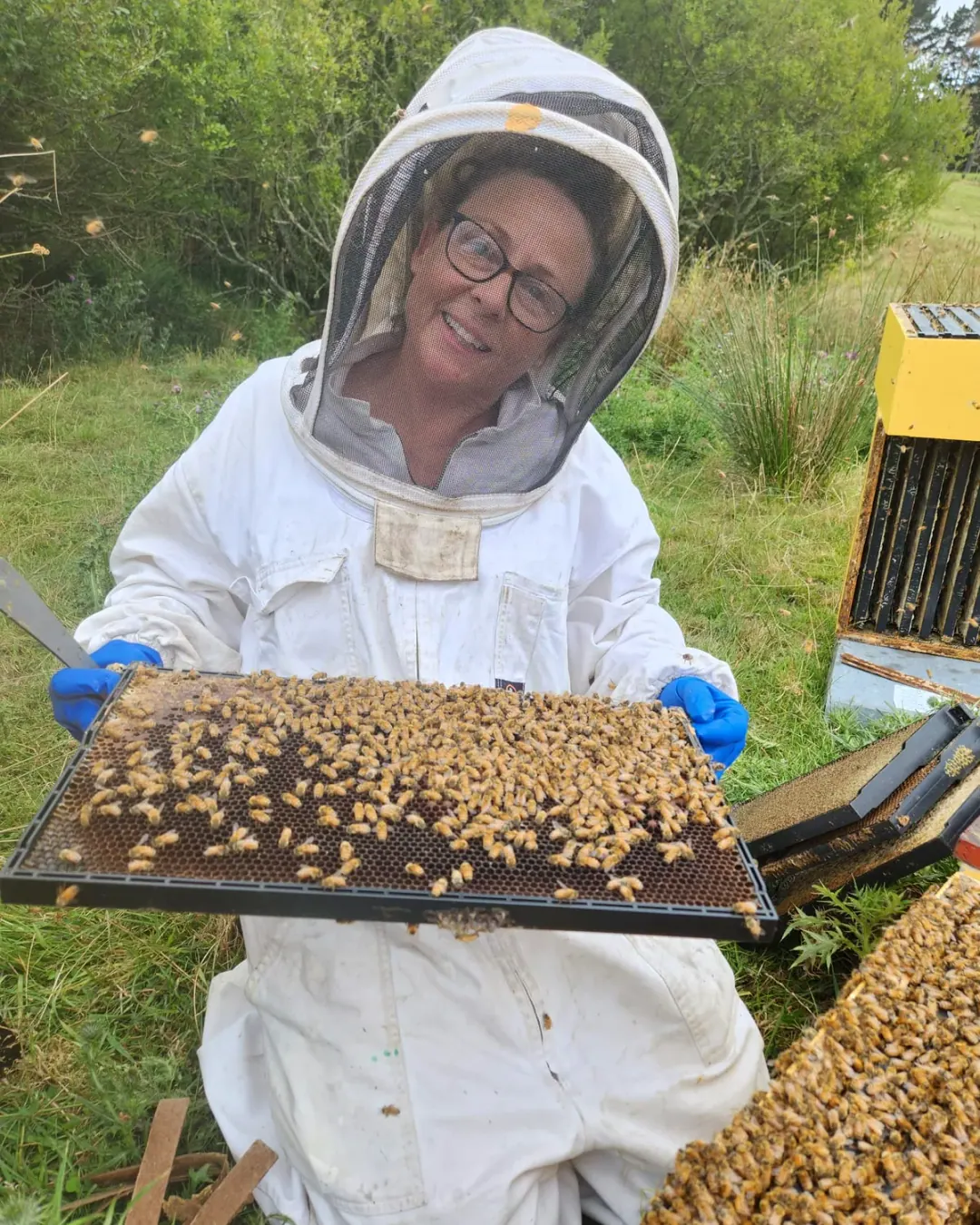
What a state actually means
A state is a precise, evidence-backed description of who is governing the colony now, how secure that arrangement is, and what transition is underway. It turns a complicated biological moment into language another beekeeper can understand and test at the next visit.
That is why a state is more useful than “good”, “weak” or “needs a queen”. Those labels hide the difference between a colony that should be left to complete a natural transition and one that has no viable route back to productive brood.
Mated queen, old queen, one virgin, several virgins, queen cells—or no viable queen path at all?
Eggs, larvae, brood pattern, cell stage and position, torn caps, colony tone, crowding and backfilling.
Normal growth, supersedure, emergency replacement, swarm preparation, post-swarm recovery or deliberate division.
Add space, split, protect cells, wait, recheck, requeen or combine—at a time that fits the biology.
The detail changes the decision
Three colonies can all contain queen cells and be in three different political and biological situations. State-based thinking forces the beekeeper to read the full pattern before acting.
The existing queen may still be present and laying while the colony prepares her successor.
The right move may be to let supersedure proceed, then verify new eggs after emergence and mating.
The colony is not merely replacing a queen; it is organising a reproductive split that can remove workforce and production.
The decision centres on space, congestion and controlled division—not simply removing cells.
The colony has young material and is reacting to queen loss by starting emergency cells.
Protect the best cells, minimise disturbance and allow enough time for emergence, mating and first eggs.
The 16-state language
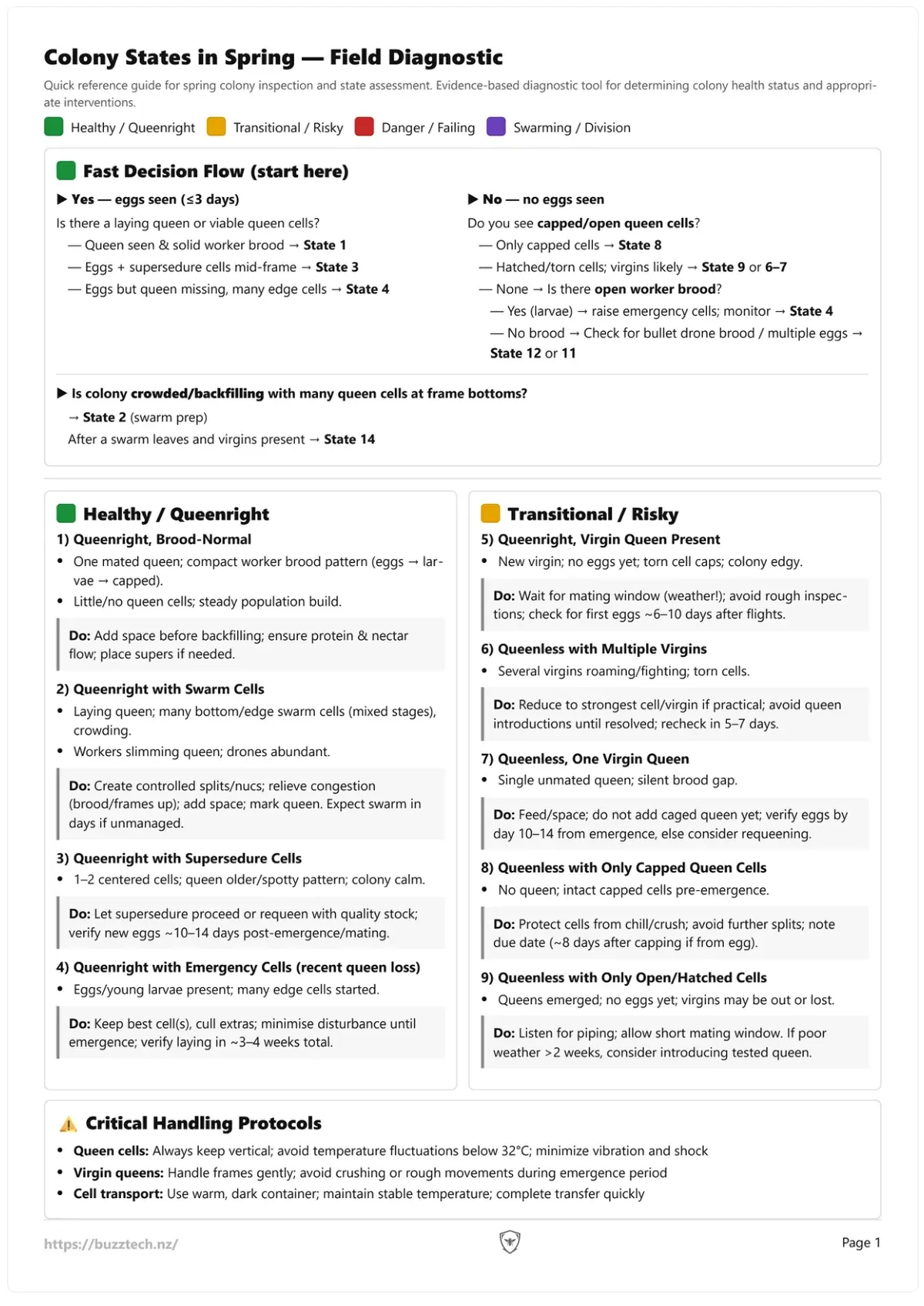
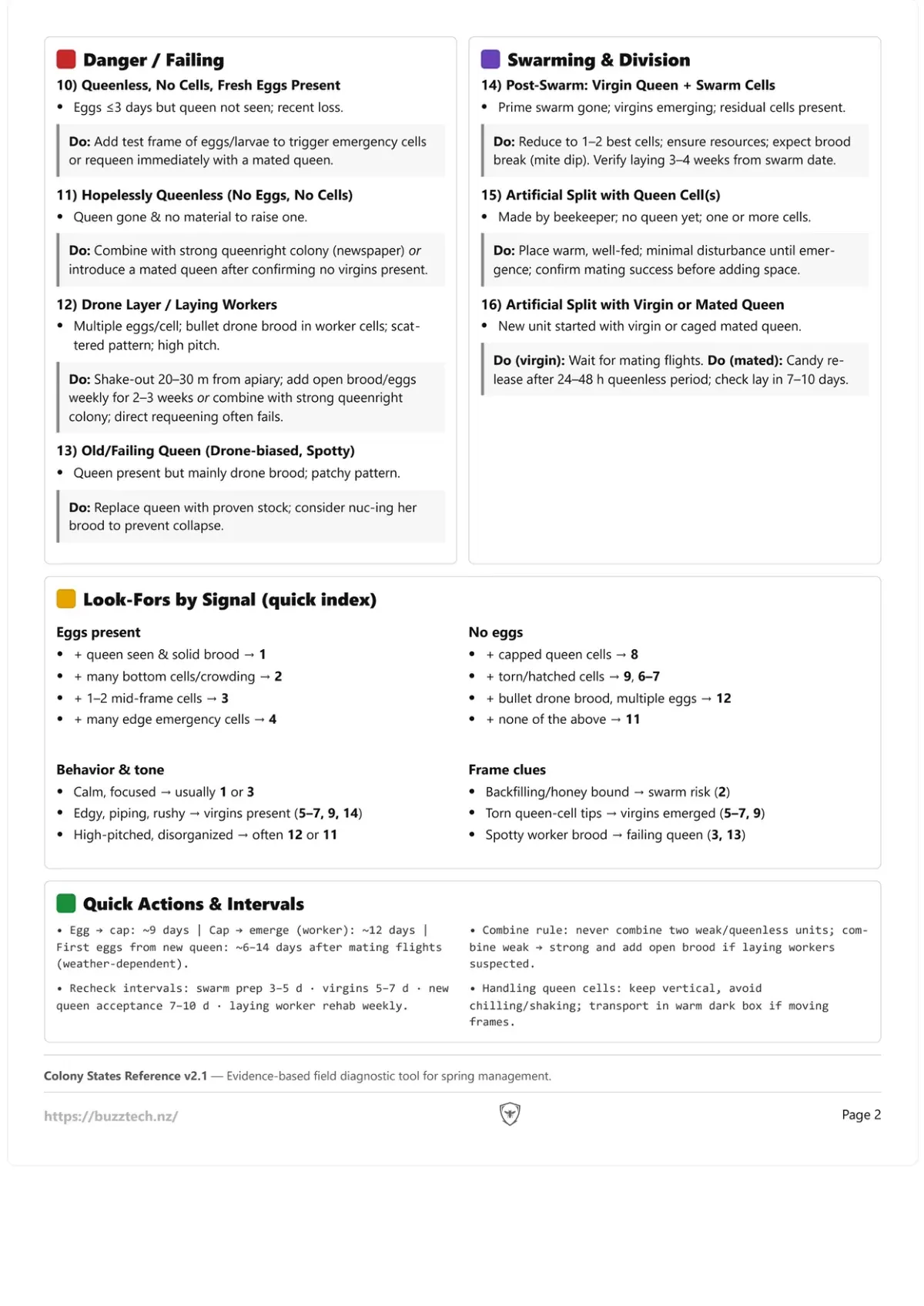
The field diagnostic groups 16 states into four families. The number gives the team a compact reference; the evidence behind it keeps the number honest.
A laying queen is present or the colony is actively managing a recognisable queen event.
The colony is between queens or inside a fragile emergence and mating window where patience matters.
The colony is at risk of becoming non-productive equipment unless the team makes a decisive, evidence-led call.
Natural and deliberate divisions have different histories, but both need their queen and brood-break timing made visible.
States become powerful over time
A colony moves through states as queens emerge, compete, mate and begin laying. Recording those changes lets the next beekeeper ask whether the colony is progressing normally, stalling or moving toward failure.
These are common paths, not rigid scripts. Weather, queen loss, cell damage and failed mating can divert a colony into states 10–13. The value is that the diversion becomes visible and discussable.
The next level of thinking
Instead of compressing the hive into a vague impression, the beekeeper has to connect evidence, biology, timing and action. That discipline makes every inspection a learning loop.
Egg age, brood pattern, cell position, colony tone and crowding belong together.
The state describes both current governance and the transition the colony is attempting.
A useful intervention in one state can destroy progress in another—especially around cells and virgins.
The next state reveals whether the diagnosis and timing were right, giving mentors something concrete to coach.
One colony, a shared history
Every inspection records what was seen, the state chosen, the action taken and the next review window. Over time, the hive history reads as a biological narrative.
That is useful to the field crew today, the manager planning the next round, and the mentor teaching someone why waiting was the skilled decision.
Old queen still laying; two centred cells; calm colony. Cells left intact and a review window set.
No eggs; no queen seen; best cells intact. Colony closed carefully and emergence timing recorded.
Virgin confirmed; no eggs expected yet. Rough inspection and premature requeening avoided.
Fresh eggs and a compact worker-brood pattern confirm that the transition completed.
The field reference
The two-page Colony States in Spring diagnostic starts with eggs or no eggs, then uses cell stage and position, brood, behaviour and timing to narrow the state and the safe response.
Why it speeds the whole operation up
State-based beekeeping does not slow experienced crews down. It removes the repeated work created by vague notes, mistimed intervention and knowledge that stays trapped in one person's head.
The next beekeeper knows what is present, what is expected and what must not be disturbed.
Mentors can challenge the evidence behind a state and review whether the predicted transition occurred.
Virgin, emergence and mating windows stay visible, reducing premature requeening or destructive inspections.
Managers see which colonies progressed, stalled, repeated a pattern or entered a failing state.
See it working
In twenty minutes we can show how Forest & Bees uses shared states for round reports, crew planning, field follow-up and mentor conversations. You see a working operating system, not a staged demo.
Your information stays optionalThe walkthrough uses the Forest & Bees system with permission. You choose whether to discuss your own scale, locations or commercial details.