Hive history
Each scan should bring up the prior state, last action and next expected check.
Hive tags and QR/RFID
Physical identity turns field notes into usable history. BuzzTech uses hive tags, QR/RFID workflows and apiary context to connect inspections, equipment, movements, treatments, state history and follow-up work.
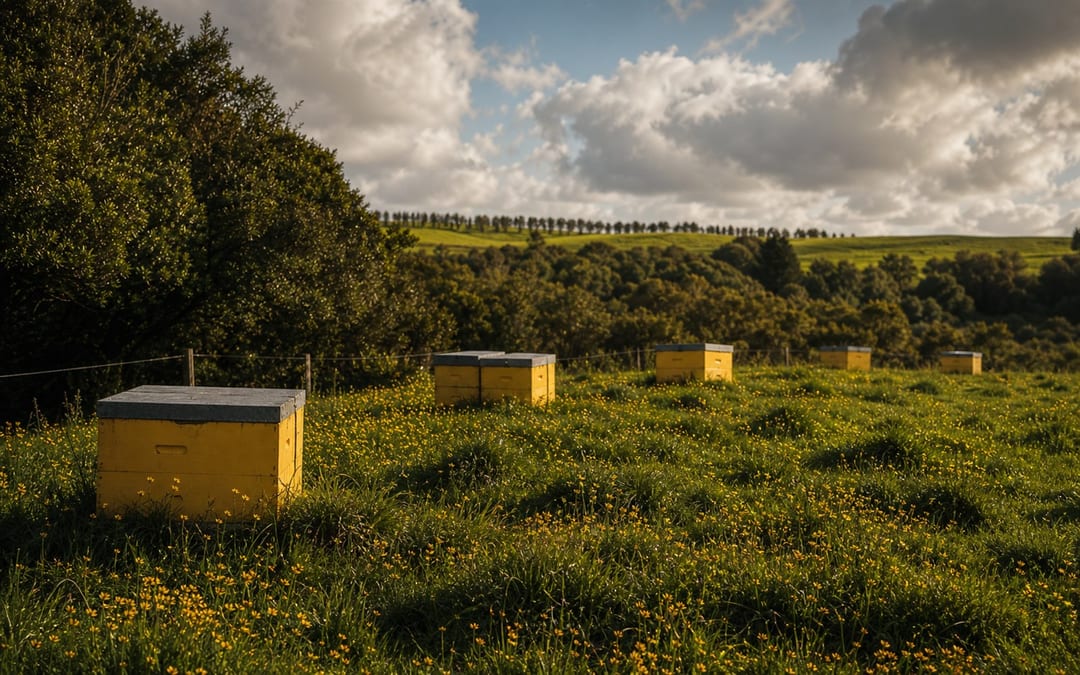
Where it helps
Each scan should bring up the prior state, last action and next expected check.
Boxes, pallets and other assets can carry useful movement and disease-control context.
The right tag method depends on crew workflow, speed, cost, equipment and environment.
Site context helps with route planning, access notes, movement history and run lists.
Mite counts, Harbo assay results and treatment records stay attached to hive and site history.
Tags only work when crews can scan and record without adding friction to the visit.
Identity in practice
The identifier is not the product. It is the reliable join between the physical hive, the crew's observation and the follow-up that should happen next.
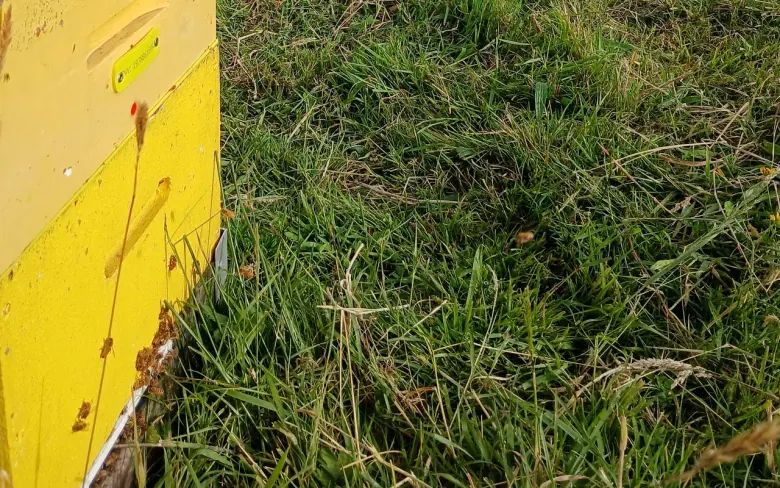
Use printed numbers, QR or RFID according to the job and the hardware already in the operation.
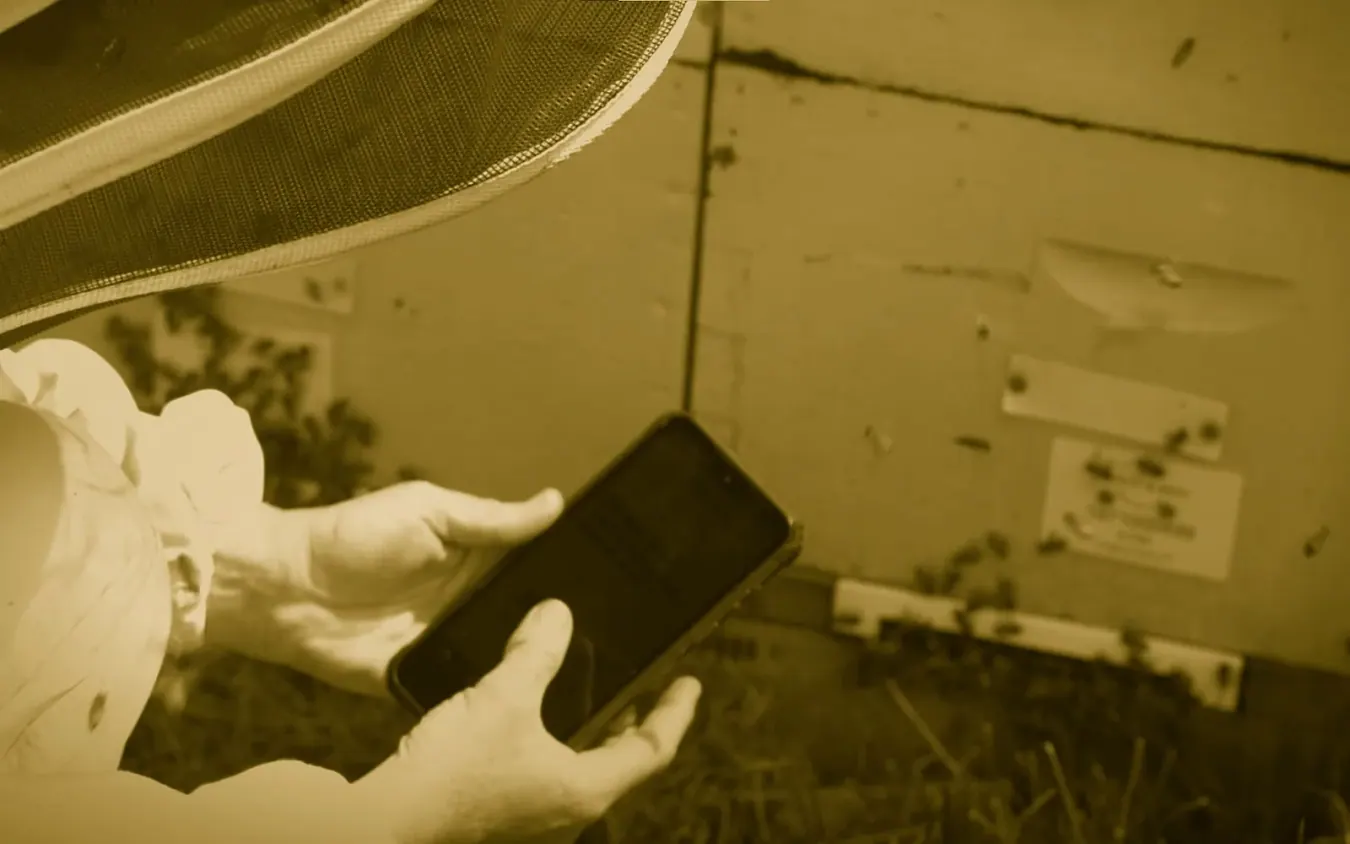
Scanning opens the right history before the hive is opened and keeps the visit attached afterwards.
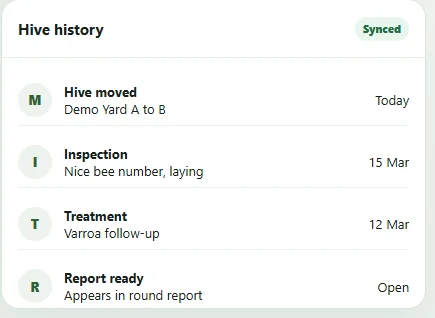
The next crew sees the prior state, action and due date instead of decoding shorthand.
First pilot
A tag pilot should prove that physical identity reduces memory gaps and makes reports more reliable.
Choose QR, RFID or mixed identity based on field conditions.
Make the first screen useful enough that crews want to scan.
Show prior state, queen source, varroa context and next action at the hive.
Turn scans into site progress, overdue work and risk reports.
Why identity matters for VSH
A Harbo score only helps selection when the scanned hive, brood frame, queen source and later yield record stay connected. Tags make that possible without asking crews to reconstruct the record later.
Use the existing hive or inventory scan before the assay workflow starts.
Apiary, queen source, treatment history and brood-frame outcome stay with the result.
Managers can compare VSH, yield and survival without hunting through notes.
Repeat assays can be compared against the same hive identity over time.
See it working
We walk through BuzzTech as it is used at Forest & Bees: round reports, crew planning, field follow-up and the systems behind the week. You see a functioning business, not a staged demo. We do not need your hive count or operational figures to show it.
Your information stays optionalThe walkthrough uses the Forest & Bees system with permission. You choose whether to discuss your own scale, locations or commercial details.