Start with one apiary, free.
Keep inspections, follow-up dates and hive history without tags or importing old records. Harbo assay tools are there when you want them.
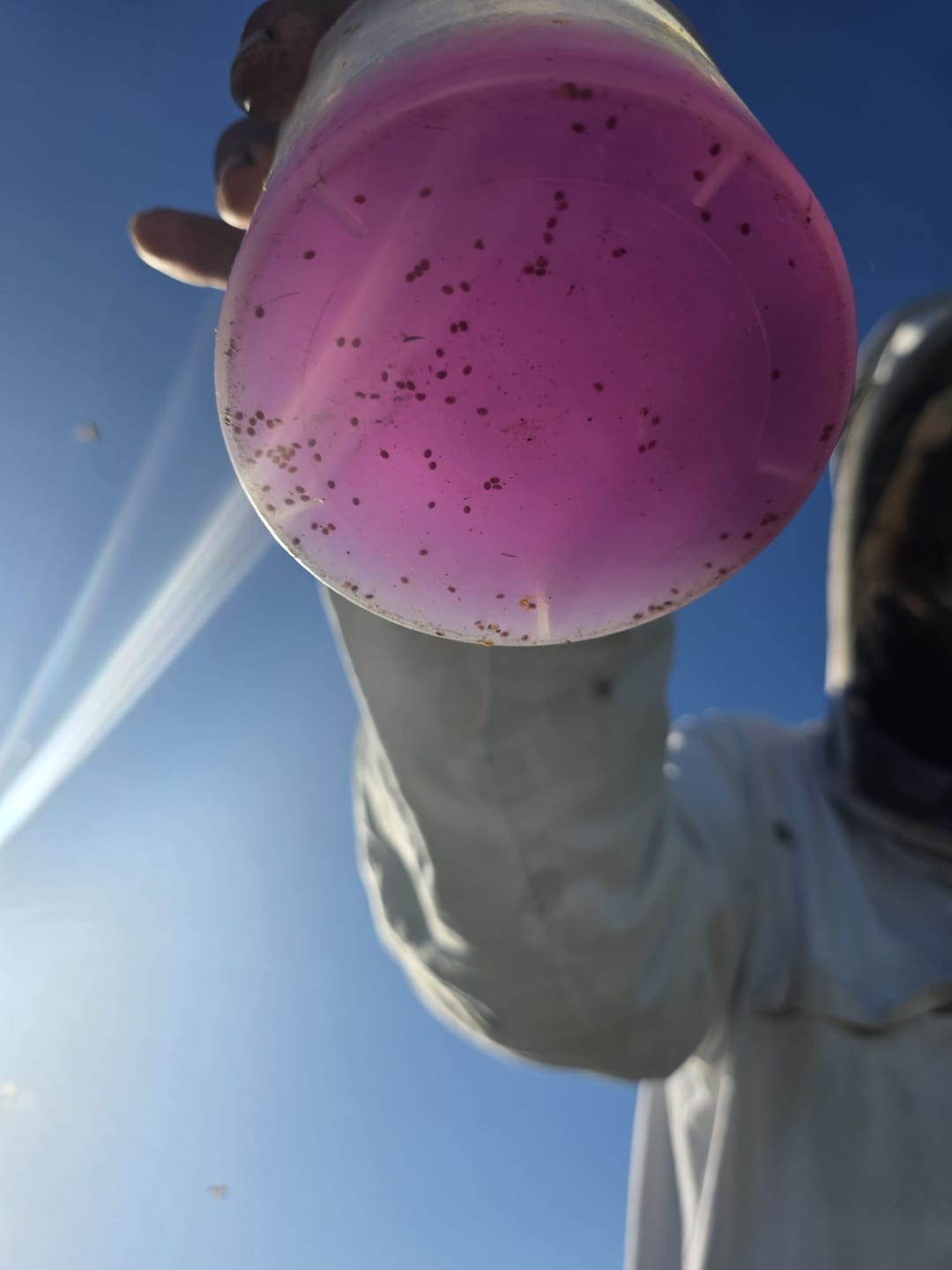
Varroa follow-up, without the gaps
BuzzTech turns your crew's hive visits into tomorrow's work list: what was checked, what changed, what needs action and who is doing it. Built for commercial beekeeping teams in New Zealand and Australia.
No prep requiredStart with one apiary. Lid numbers are fine, tags are optional, and there is no spreadsheet migration.
See it, don't imagine it
Real product, demo data. This is what your manager, your crew and your auditor would actually look at.
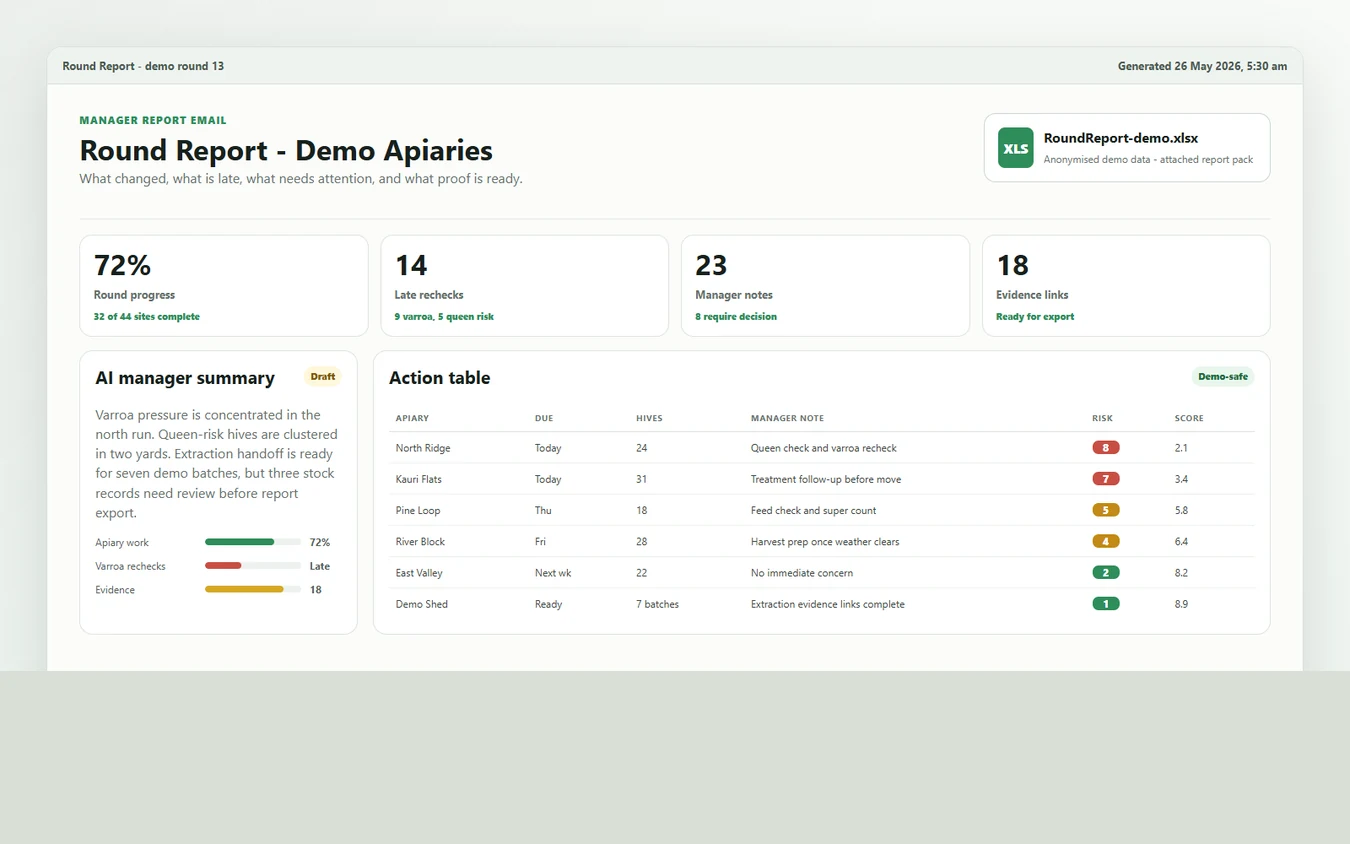
What changed, which rechecks are late and what needs a decision, in one email.
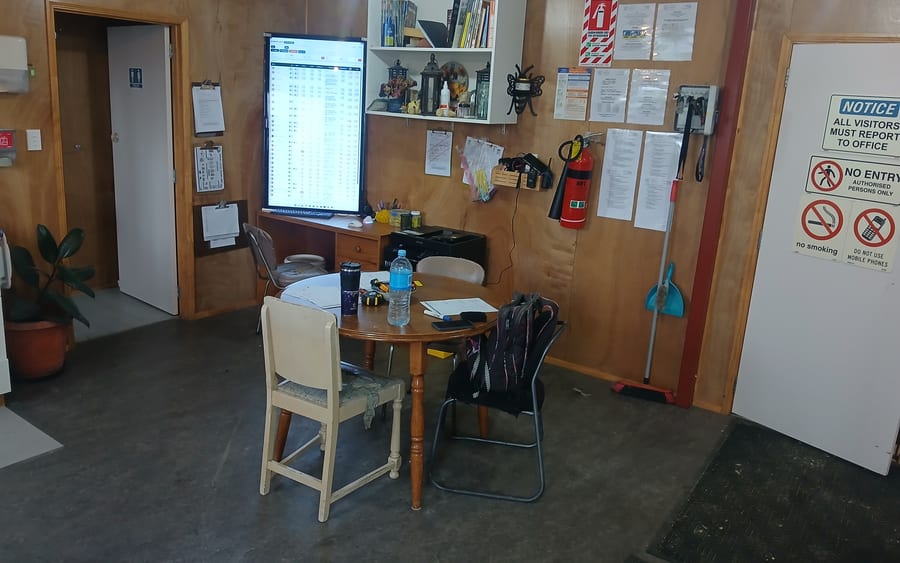
Priorities, run-ready lists by yard and the weather window. Nobody asks what matters today.
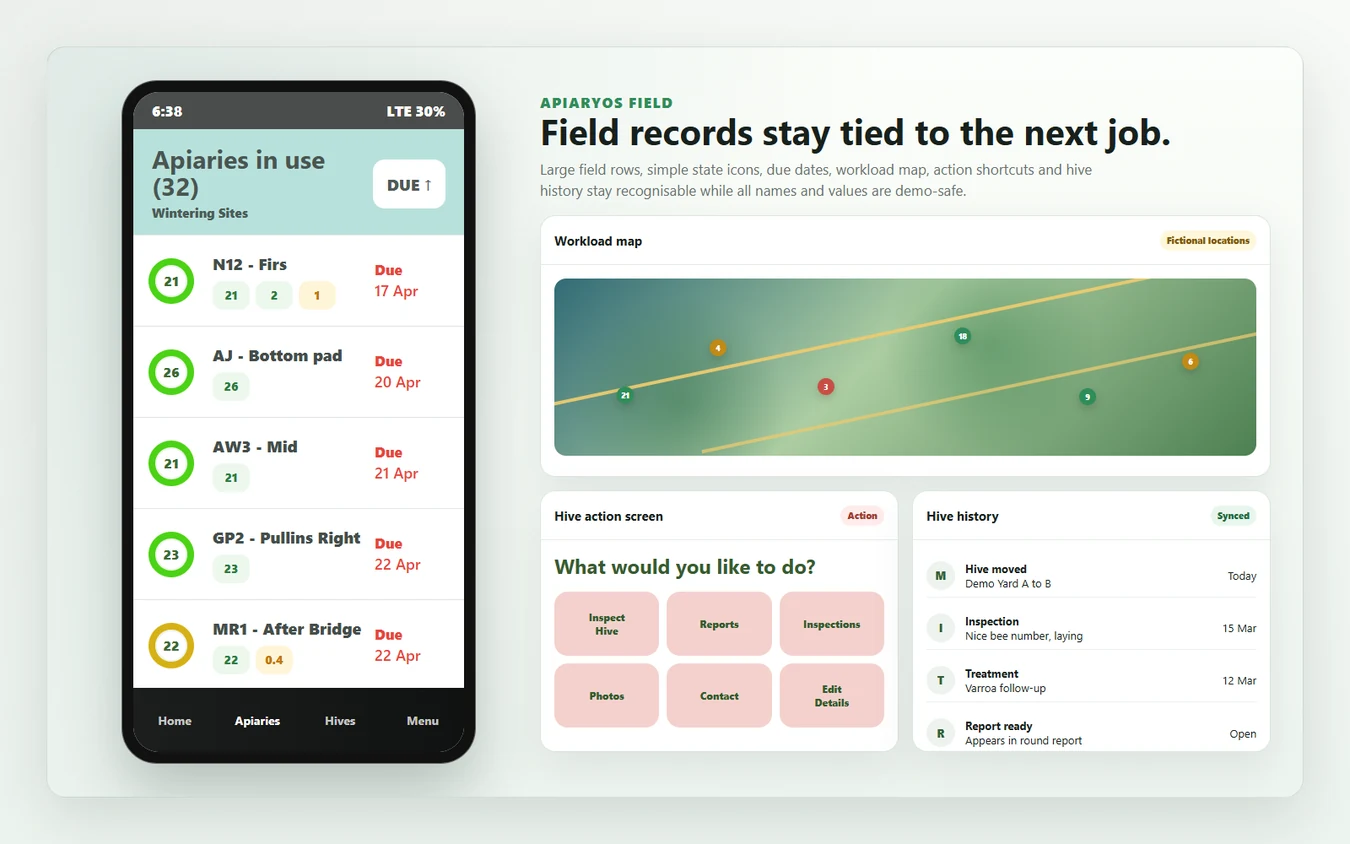
Offline records at the hive. Due work in red, history at the box, follow-ups that write themselves.
Choose your start
Keep inspections, follow-up dates and hive history without tags or importing old records. Harbo assay tools are there when you want them.
Walk through the working Forest & Bees round report, crew board and field app, then focus the conversation on one workflow that matters to you.
Why now
Expansion no longer hides weak records, poor follow-up, missing evidence or avoidable honey-value leakage. Operators need systems that show what happened, what changed and what should happen next.
Source notes: MPI 2025 apiculture monitoring data | MPI 2025 colony loss survey | Bioeconomy Science Institute 2025 colony loss release | Newsroom 2024 hive number context.
Commercial onboarding
We put the working Forest & Bees system on screen and talk through the workflow you want to understand. No figures required from you and no prep on your side.
Run your normal round. The records, follow-ups and work lists happen as you work. Lid numbers are identity enough.
Tags, sensors, extraction, honey inventory and audit evidence can wait until the basics are already paying for themselves.
Operating stack
The same records that plan the week can carry extraction, honey inventory, retail, sensors and audit evidence. One system, added a layer at a time.
Visits, tags, queen issues, harvest readiness, crew judgement, treatment context and follow-up work.
ApiaryOS for inspections, states, ApiDash dashboards, stock, extraction, reports and training.
ApiDrums, ApiBlends and ApiPos connect inventory, sales, pricing, lab coverage, offers, market readiness and blend economics.
Hive sensors, shed temperature, scales, chillers, warm rooms, plant data and public environmental context.
Reports, support records, evidence packs, corrective actions and human-reviewed AI drafts.
Search paths
Counts, treatment timing, rechecks, overdue work and site comparisons.
OpenHive states, notes, photos, GPS and follow-up captured where coverage is unreliable.
OpenPhysical identity for hives, boxes, equipment, history and traceability.
OpenField records, varroa, RMP evidence and honey traceability for New Zealand teams.
OpenOffline records, GPS context, hive movements and varroa transition-to-management support.
OpenField-to-batch records, drum inventory, blend planning, RMP packs and ECERT support.
See it working
We walk through BuzzTech as it is used at Forest & Bees: round reports, crew planning, field follow-up and the systems behind the week. You see a functioning business, not a staged demo. We do not need your hive count or operational figures to show it.
Your information stays optionalThe walkthrough uses the Forest & Bees system with permission. You choose whether to discuss your own scale, locations or commercial details.